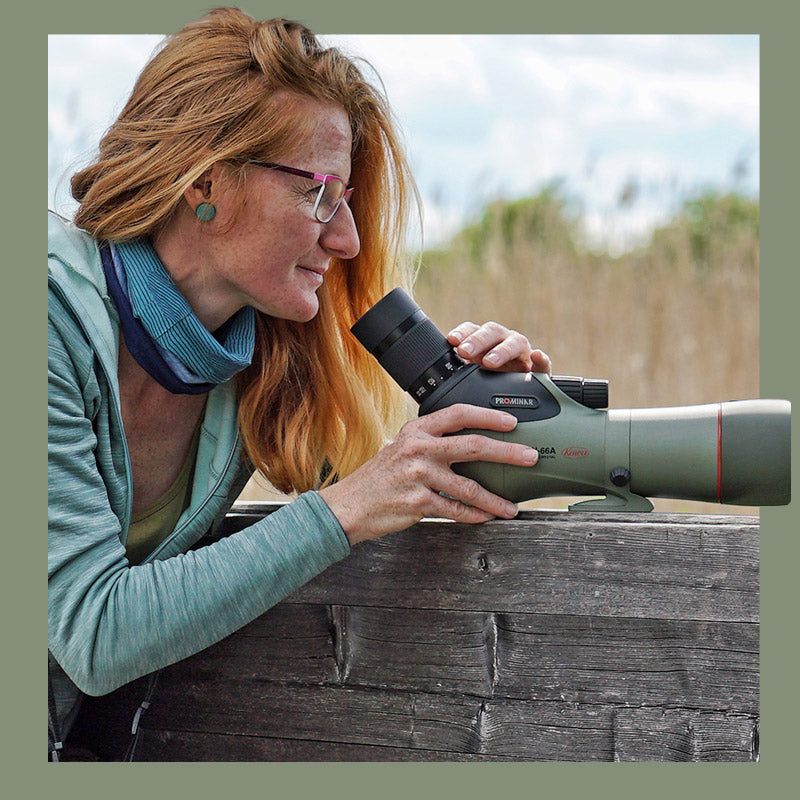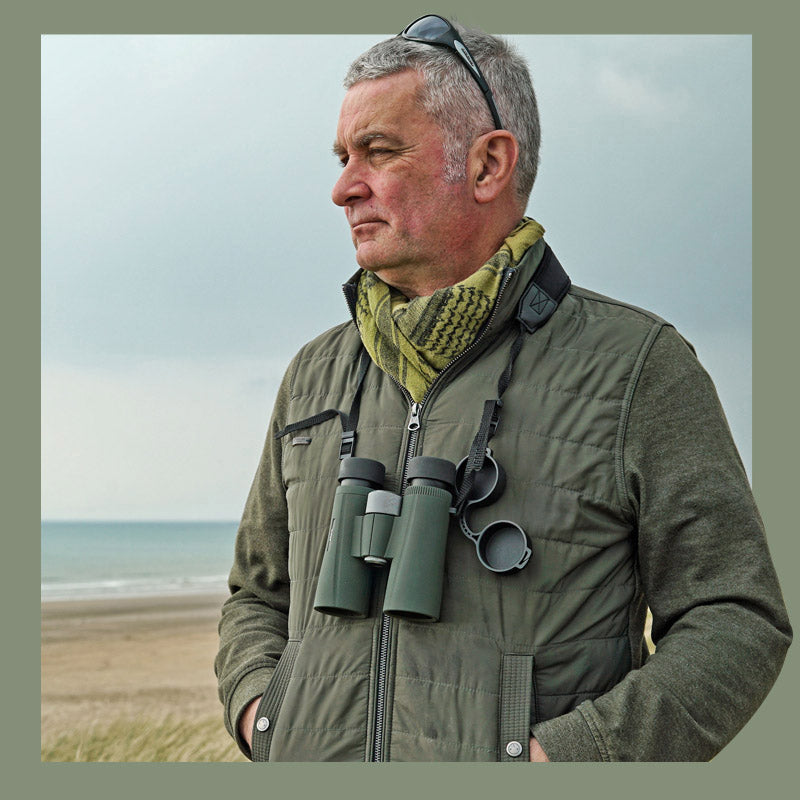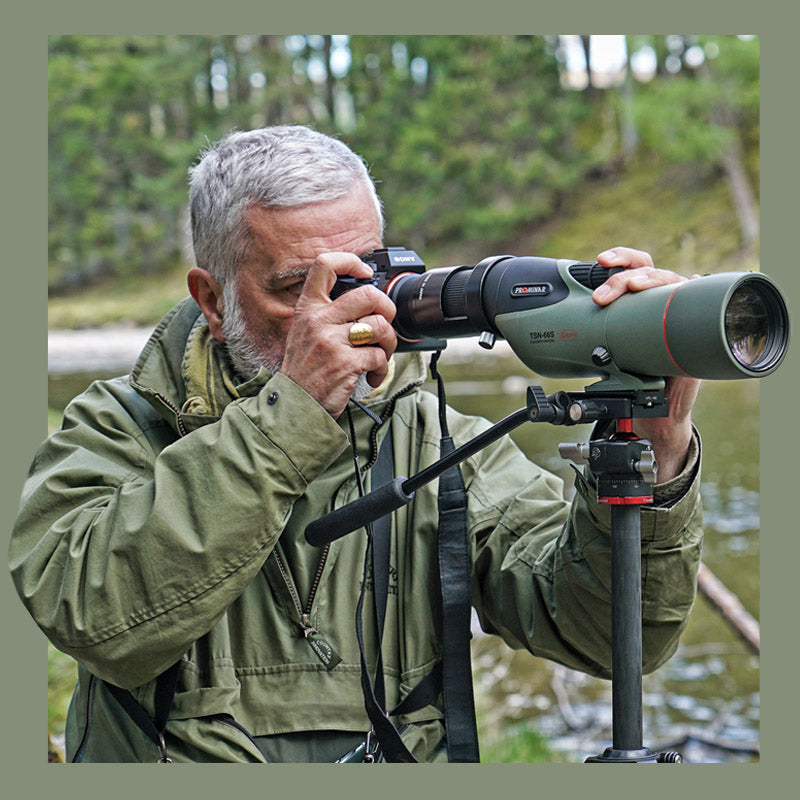

From scanning shorebirds along a coastal marsh to studying a hawk’s feather detail hundreds of yards away, a quality spotting scope makes the difference between simply seeing wildlife and truly understanding it. If you’re shopping for a scope for birding or nature observation, these are the features that matter most and how to recognize them.
1. Optical Performance Comes First

Everything starts with the glass. High-end optics deliver cleaner detail, better contrast, and more accurate color, especially at higher magnifications. Look for:
-
Fluorite Crystal. Widely regarded as the benchmark for controlling chromatic aberration and maximizing contrast.
-
ED (extra-low dispersion) Glass. Minimizes color fringing and preserves sharp detail. There are wide variances in quality of ED glass.
-
Field-Flattening Lenses. They keep the image sharp all the way to the edges instead of just the center.
2. Objective Lens Diameter

The size of the front lens determines how much light the scope can collect:
-
55–66 mm: Lightweight and compact, ideal for hiking, travel, and bright daylight use.
-
77–88 mm: Brighter images with better resolution at dawn, dusk, and high magnification; slightly heavier but excellent for serious birding or sea-watching.
-
95 mm and larger: Purpose-built scopes offering exceptional light-gathering and resolution, best suited for stationary or specialized use.
3. Advanced Lens Coatings

Modern coatings improve brightness, contrast, and glare control. Premium scopes feature fully multi-coated optics on every air-to-glass surface, along with durable exterior coatings that repel water, oil, and dirt for easier cleaning in the field.
4. Precise Focusing Control

Wildlife rarely stays still. A good focusing system should let you:
-
Snap into focus quickly with a coarse adjustment.
-
Fine-tune critical detail with a micro-focus control.
Dual-speed or dual-knob focusing systems excel here, offering speed, precision, and reliability even when wearing gloves.
5. Eyepiece Matters More Than You Think

The eyepiece affects field of view, comfort, and overall image quality:
-
Wide-angle zoom eyepieces provide a more immersive view and make it easier to follow moving birds.
-
Generous eye relief is essential for eyeglass wearers.
-
ED glass and field-flattening elements help maintain sharpness and brightness across the entire image.
6. Field of View and Viewing Comfort

A wider apparent field of view feels more natural and makes scanning flocks or tracking fast-moving birds much easier. When comparing eyepieces with similar magnification ranges, choose the one with the wider field, you’ll notice the difference immediately.
7. Controlling Color Fringing

At high magnifications or in bright, contrasty conditions, chromatic aberration can show up as colored edges around subjects. Top tier ED glass significantly reduces this effect, while fluorite crystal optics push performance even further, delivering crisp detail, strong contrast, and subtle tonal separation.
8. Built for Real Outdoor Use

A spotting scope needs to handle rough conditions. Look for:
-
Magnesium alloy or similarly lightweight metal bodies for strength without excess weight.
-
Full weather sealing, including O-rings and nitrogen purging, to prevent moisture intrusion and internal fogging.
9. Size, Weight, and Balance

The best scope is the one you actually take with you. A compact, well-balanced design paired with a lightweight tripod means less fatigue and more time observing.
If you frequently hike or travel, prioritize portability. If you focus on digiscoping or low-light viewing at dawn and dusk, a larger objective lens can be a worthwhile trade-off.
Why Kowa PROMINAR Spotting Scopes Stand Out
If you’re looking for a spotting scope that checks every box above, Kowa’s PROMINAR series consistently rises to the top.
-
Pure Fluorite Crystal Objective Lenses
PROMINAR scopes use genuine fluorite crystal to dramatically reduce chromatic aberration, producing razor-sharp images with natural color, ideal for detailed plumage study and long-distance identification. -
Dual-Speed Precision Focusing
Kowa’s focusing system allows fast subject acquisition and ultra-fine control, making it easy to lock in critical focus even at 60× magnification and beyond. -
Lightweight Magnesium Construction
A rugged magnesium alloy body keeps overall weight down while maintaining durability for long days in the field. -
Wide-Angle ED Zoom Eyepiece
The TE-11WZ II wide-angle zoom eyepiece incorporates ED glass and field flatteners to deliver a large, immersive view that stays sharp edge-to-edge, with comfortable eye relief for glasses wearers. -
Exceptional Versatility
PROMINAR scopes pair seamlessly with digiscoping adapters, extenders, and astronomical eyepieces, making it easy to move from birding to photography or even lunar observation without changing systems.
Bottom Line:
If you want top-tier optics, precise control, real-world durability, and a spotting scope system that can grow with your interests, Kowa PROMINAR is purpose-built for serious wildlife observation. View the Kowa Spotting Scope Line-up.