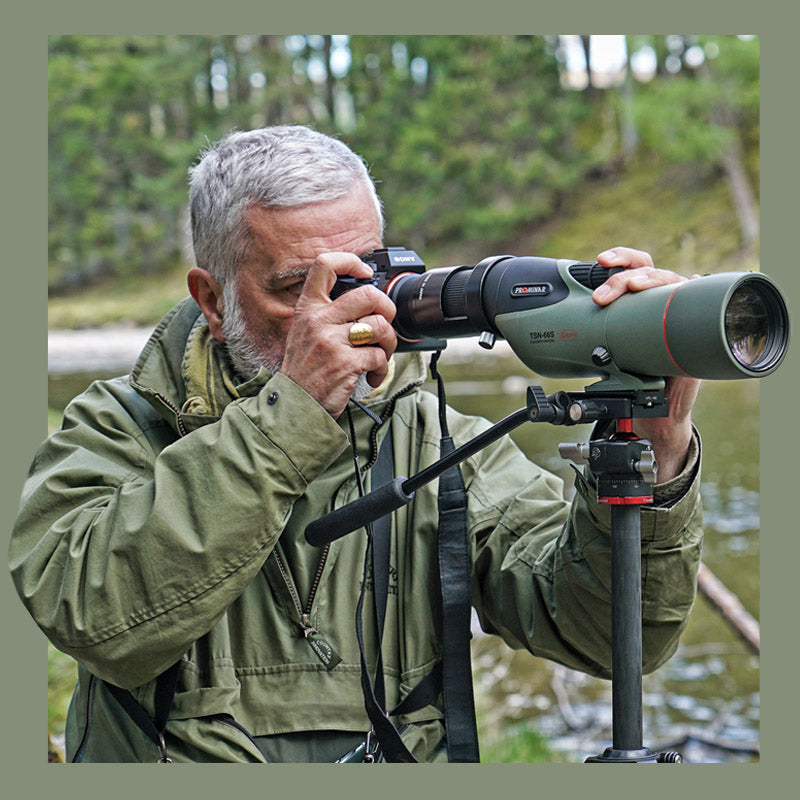

Sharp, bright views start with spotless lenses. Many outdoor enthusiasts don’t realize just how much dust, salt, or fine grit can gradually dull their image quality. Whether you’re a weekend hiker, dedicated birder, or digiscoping enthusiast, taking a few minutes to clean your binoculars or spotting scope the right way can make a big difference — and protect your investment for the long haul.
This guide covers simple, effective cleaning methods for your Kowa optics using minimal gear and a gentle touch.
What You’ll Need

You don’t need a full cleaning kit — just a few essentials:
-
A soft brush (like a lens brush or camel-hair brush) to remove loose dirt or sand
-
A microfiber cloth for wiping and polishing
-
Lens cleaning solution (available online or from any camera store)
Step-by-Step: Cleaning Your Binoculars
1. Remove loose debris first

Always begin by brushing away dust or grit. If you skip this step, you risk scratching the glass. Hold your binoculars facing slightly downward so gravity helps remove any particles as you gently sweep across both the eyepieces and objective lenses. Don’t forget the edges and crevices where dust collects.
2. Wipe carefully with a microfiber cloth

Once the surface is clear, use your microfiber cloth to polish the lenses in soft, circular motions. Keep the optics angled downward and apply almost no pressure — let the cloth do the work.
3. Finish with lens cleaning fluid

Mist a small amount of cleaning fluid directly onto the lens — not the cloth. Keep the spray bottle a few inches away to avoid over-saturating. Use a clean section of your microfiber cloth to gently buff away any fingerprints or smudges, then check the lens under bright light for streaks or residue.
Cleaning Your Spotting Scope - Expert Tips from Jeff Bouton

Use gravity to your advantage
Just like binoculars, tilt your spotting scope downward when cleaning. Start with a soft brush to remove loose material — especially after time at the beach or in dusty conditions. Pay special attention to the front (objective) lens, which tends to collect the most grime.
Skip the circular scrubbing
Circular wiping can push debris into the glass surface. Instead, use smooth, sweeping strokes that lift particles away.
Only add fluid when you need it
For dried salt, fingerprints, or water spots, use a light mist of lens cleaner. Follow with a dry section of your cloth to remove any remaining moisture.
Once finished, inspect the lens in bright sunlight — even a few streaks can affect image contrast and sharpness. If needed, a quick second pass is worth the effort.
How Often Should You Clean Your Optics?
-
Before each trip: Give your lenses a light brush or wipe to remove dust.
-
After coastal or wet outings: Clean thoroughly to get rid of salt, sand, or moisture buildup.
-
When clarity drops: Don’t wait — inspect and clean immediately to restore performance.
Make it part of your regular gear routine, and your binoculars or scope will stay clear, sharp, and ready for years of use.