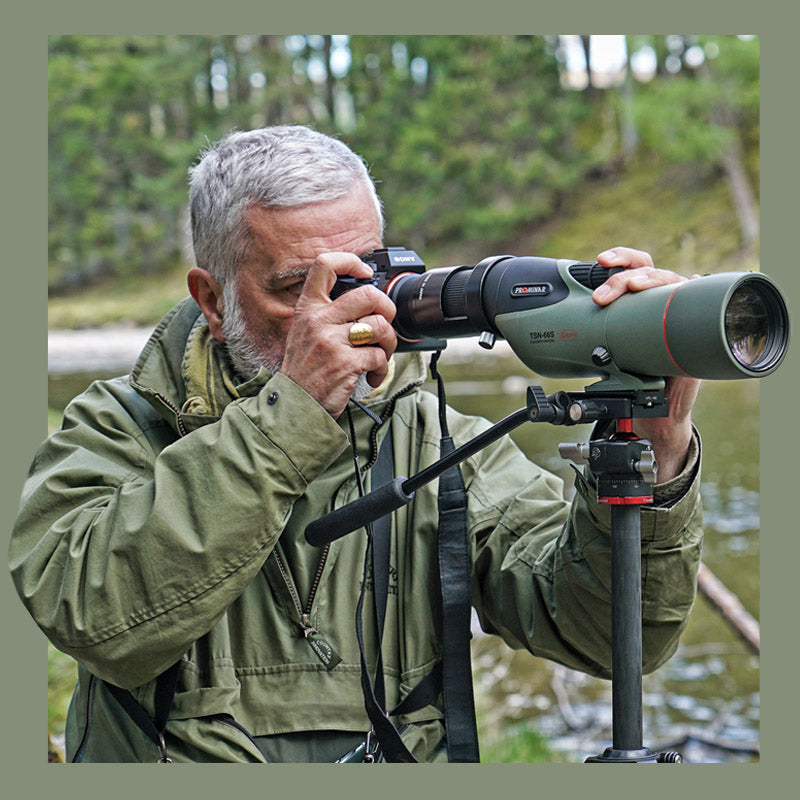

When you’re viewing a distant shorebird at sunrise or scanning a shaded woodland trail, one factor plays a major role in what you actually see: objective lens size.

It directly affects brightness, comfort, and performance, especially in low light. But bigger isn’t automatically better.
Let’s break down how objective diameter impacts brightness, exit pupil, portability, digiscoping, and which sizes make the most sense for different birding styles.
What Is an Objective Lens?

The objective lens is the large front lens on a binocular or spotting scope. Its size is measured in millimeters.
Binocular example: 8x42 = 42 mm. objective lenses
Spotting scope example: 88 mm. or 99 mm. refers to the front lens diameter
In simple terms, a larger objective lens gathers more light. That can mean:
- Brighter images in dim conditions
- Improved detail and contrast
- More relaxed, comfortable viewing
However, larger lenses also increase weight, bulk, and cost. The best size depends on how and where you bird.
Bigger Lenses: Benefits and Optical Challenges
 Large objective lenses excel in low light, but they also demand more from optical design.
As lens diameter increases, controlling chromatic aberration (color fringing around high-contrast subjects) becomes more difficult. Think bright egrets against a dark marsh or hawks against a bright sky.
To maintain sharpness and accurate color, premium large scopes often use:
- ED (Extra-low Dispersion) glass
- Fluorite crystal elements (PROMINAR)
- Advanced coatings
- Precision optical engineering
Without those refinements, a large lens won’t deliver its full potential.
Large Objective Spotting Scopes (88–99 mm.)
If you bird wide-open spaces, coastlines, wetlands, mudflats or regularly digiscope, large objectives can feel transformative.

Why They Perform So Well
A bigger objective gathers more light, which helps when:
- Birding at sunrise or sunset
- Working under heavy cloud cover
- Viewing into shadowed areas
- Using high magnification (40–60x)
At higher zoom levels, brightness drops significantly. Larger objectives help preserve image clarity when you need maximum reach.
Dawn and Dusk Performance
Low light is where larger lenses truly show their advantage. They provide:
- Brighter views
- Better perceived sharpness
- Reduced eye strain during long sessions
When birds are most active but light is limited, objective size matters most.
Digiscoping: Light Is Everything

If you attach a camera or smartphone to your scope, light becomes even more critical.
More light allows:
- Faster shutter speeds (sharper images)
- Lower ISO settings (cleaner photos)
- More consistent results in overcast weather
If your digiscoped images look soft, it’s often due to slow shutter speeds caused by limited light. A larger objective can make the difference between a missed shot and a keeper.
Exit Pupil: The Overlooked Brightness Factor
Objective size also determines exit pupil, one of the most practical brightness indicators.
Exit Pupil Formula:
Objective diameter ÷ magnification
Examples:
8x42 binoculars → 42 ÷ 8 = 5.25 mm.
10x42 binoculars → 42 ÷ 10 = 4.2 mm.
8x32 binoculars → 32 ÷ 8 = 4 mm.
88mm scope at 60x → 88 ÷ 60 = 1.47 mm.
Why It Matters
A larger exit pupil generally provides:
- A brighter-looking image
- Easier eye placement
- A more forgiving, comfortable view
This is why moderate magnification paired with a healthy objective size feels best in dim conditions.

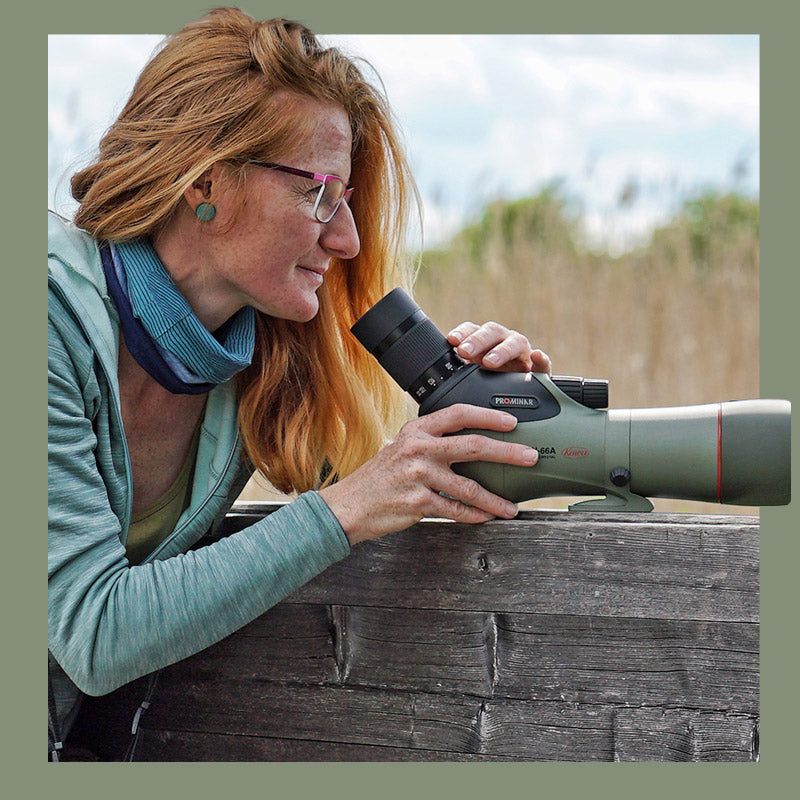
Mid-Size Spotting Scopes (Around 66 mm.)
For many U.S. birders, mid-size scopes hit the sweet spot.
They offer:
- Strong brightness and resolution
- Manageable weight
- Easier transport for hiking and travel
- Solid performance in most environments
Ideal For:
- Birders who hike regularly
- Mixed habitats (shorelines, woods, wildlife refuges)
- Digiscopers wanting quality without maximum bulk
In practical terms, a scope you bring every time is better than a larger one that stays in the car.
Compact Optics: When Portability Wins
 Compact models sacrifice some low-light performance, but they shine in convenience.
Compact Spotting Scopes (50–55 mm.)
Great for:
- Travel birding
- Day trips
- Active walking rather than stationary viewing
Trade-offs include:
- Reduced brightness at high magnification
- Less comfort at dawn or dusk
- Greater reliance on good lighting
- In full daylight, however, compact scopes can perform remarkably well.
Compact Binoculars (25–32 mm.)

Smaller binoculars like 8x25 or 8x32 are ideal when:
- Weight matters
- You’re covering long distances
- You’re traveling light
- Birding is mostly daytime activity
Modern coatings and glass quality have dramatically improved compact binocular performance compared to older generations.
Best Objective Sizes for Birding Binoculars
42 mm.: The All-Around Standard

8x42 and 10x42 remain the most popular sizes in the U.S. because they offer:
- Excellent brightness
- Comfortable exit pupil (especially 8x42)
- Versatility across lighting conditions
- For many birders, 42 mm. is the safest choice.
32 mm.: Lightweight and Capable
 8x32 binoculars are a favorite for active birding because they:
- Reduce neck strain
- Perform very well in daylight
- Balance portability with strong optical performance
25 mm.: Always With You
Pocket binoculars won’t match 42 mm. models in low light, but their convenience is unmatched.
If bulk prevents you from carrying optics, compact is often the smarter choice because you’ll actually bring them.
Kowa Optics: Matching Objective Size to Birding Style
Kowa offers objective sizes tailored to different birding needs, from ultra-portable travel setups to maximum-performance optics.
Spotting Scopes

PROMINAR Fluorite Series
- 99 mm. – Maximum light gathering and elite performance
- 88 mm. – Exceptional brightness with improved portability
- 66 mm. – Versatile, balanced performance
- 55 mm. – Compact and travel-friendly
GENESIS Series
Premium optics for birders seeking top-tier performance.
BD II XD Series
Excellent value with wide, immersive viewing — ideal for active birding.
SV II Series
Reliable and user-friendly — great for beginners.
The Bottom Line
Objective lens size absolutely impacts:
- Low-light brightness
- Viewing comfort
- High-magnification performance
- Digiscoping results
But the best size isn’t the biggest, it’s the one that fits your birding style, environment, and how far you’re willing to carry your gear.
Because the best optics aren’t the largest ones.
They’re the ones you take into the field.