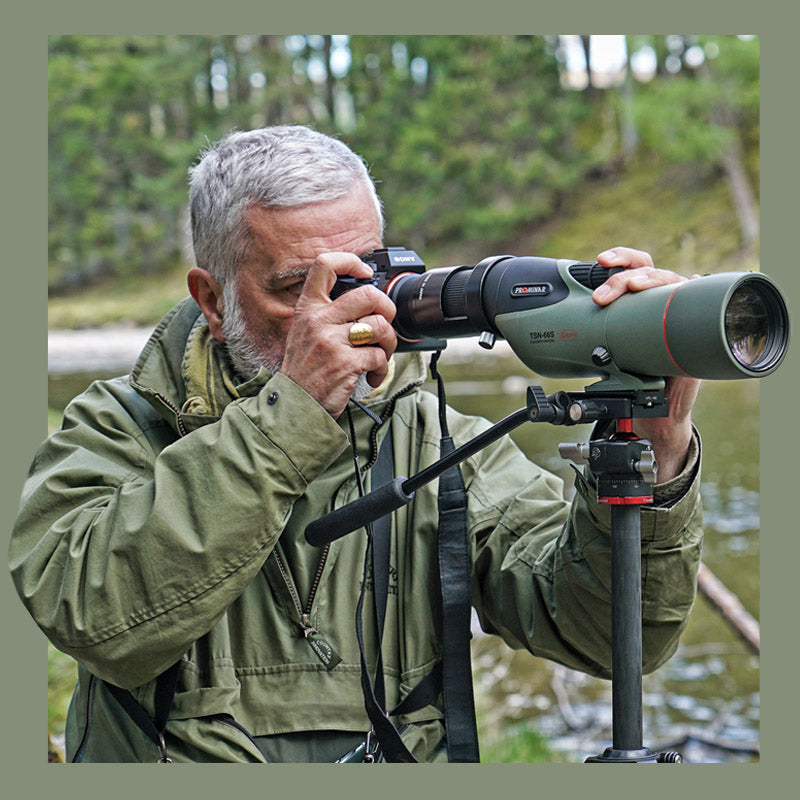

If you’re new to birdwatching, one of the first gear questions you’ll run into is whether you need binoculars or a spotting scope. The short answer? It depends on where you bird and what kind of birds you enjoy watching.
Both tools are incredibly useful but they serve different purposes. Here’s a clear, practical way to decide which one fits your style.
Why Binoculars Are the Go-To Tool for Most Birders
For most people, binoculars are the natural starting point and they remain essential.
Lightweight and Easy to Carry

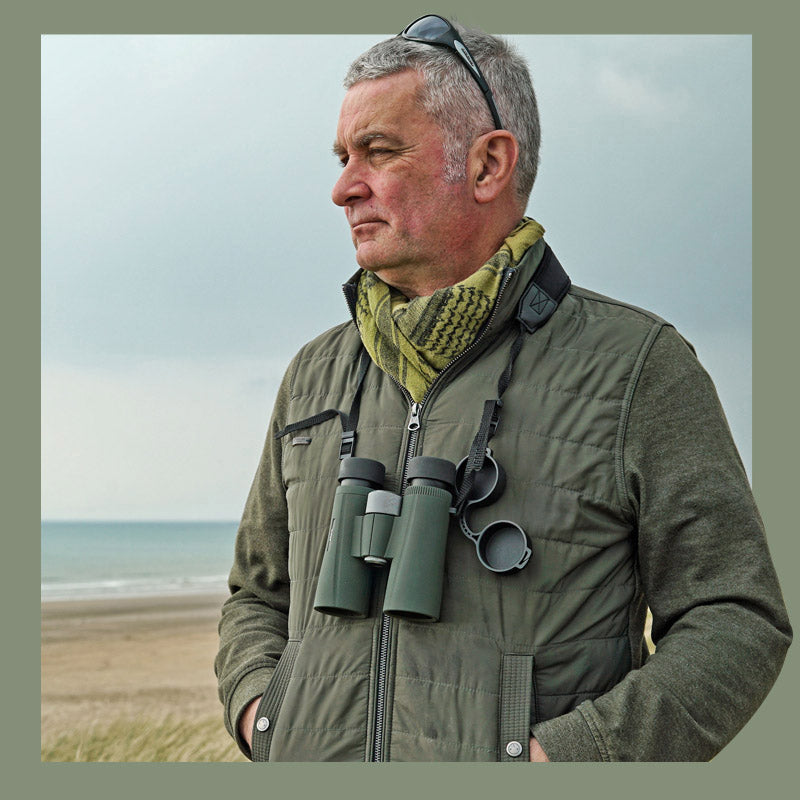
Binoculars are designed for mobility. They’re compact, light, and comfortable to wear all day, making them ideal for walks, hikes, and exploring new birding locations without feeling weighed down.
Fast and Instinctive to Use

Birds don’t wait around. Binoculars come to your eyes instantly, letting you track birds as they dart through branches or cross the sky. For songbirds, woodpeckers, warblers, and other fast movers, nothing beats the speed of binoculars.
Wide Field of View

Binoculars show more of the surrounding area, which makes it easier to locate a bird and stay with it as it moves. That wide view is especially helpful in forests, brushy areas, and mixed habitats.
Why Birders Rely on Spotting Scopes

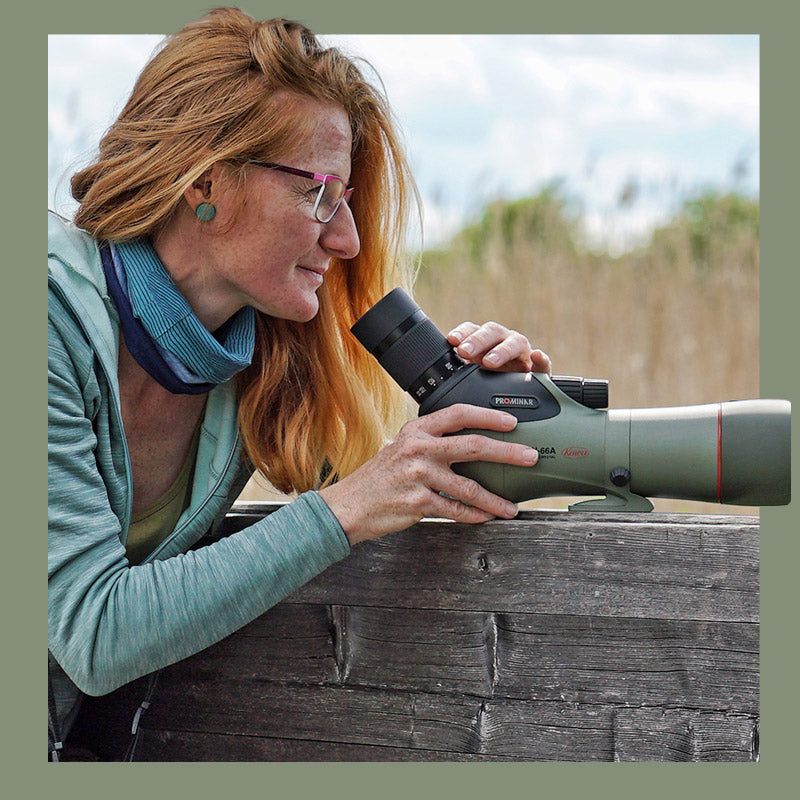
A spotting scope is essentially a high-powered telescope built specifically for wildlife observation. While it’s less portable than binoculars, it offers one big advantage: magnification.
Exceptional Detail at Long Range

Spotting scopes typically provide 20–60× magnification or more, allowing you to identify birds that are far beyond binocular range. Shorebirds across tidal flats, ducks on distant lakes, or raptors perched far away suddenly become clear and identifiable.
Ideal for Birds that Stay Still

Many birds spend long periods feeding or resting in open areas, waterfowl, waders, seabirds, and birds of prey. A scope lets you observe them in detail without approaching too closely or causing disturbance.
A Powerful Tool for Digiscoping

If you enjoy photography, a spotting scope can double as a super-telephoto lens. With a simple smartphone adapter, you can capture images and videos at magnifications that are impossible to achieve hand-held with binoculars and even conventional photographic lenses.
How to Decide Which One Is Right for You
Binoculars are the better choice if:
-
You’re new to birdwatching
-
You prefer walking or hiking while birding
-
You want something quick, simple, and budget-friendly
-
You mostly watch small, active birds
A spotting scope makes sense if:
-
You bird in open environments like lakes, coastlines, or grasslands
-
You want to study distant birds in fine detail
-
You’re interested in digiscoping or long-range photography
-
You enjoy setting up in one spot and observing for extended periods
Why Many Birders End Up Using Both

With experience, many birders discover that binoculars and spotting scopes complement each other perfectly.
-
Binoculars help you locate birds quickly, scanning trees, shorelines, or sky with ease.
-
The spotting scope lets you study them closely, revealing plumage details, field marks, and subtle characteristics that binoculars can’t resolve at long distances.
Together, they offer:
-
Mobility plus magnification
-
Speed combined with precision
-
Flexibility across forests, wetlands, coastlines, and open country
Final Takeaway
Binoculars are the ideal place to start, fast, versatile, and suited to almost every birding situation. A spotting scope becomes invaluable as you spend more time observing birds at longer distances or in open habitats.
If your budget and space allow, owning both gives you a complete birding setup: binoculars for discovering birds, and a spotting scope for truly appreciating the details that make each species unique.
View the Kowa Binocular Line-up.
View the Kowa Spotting Scope Line-up.