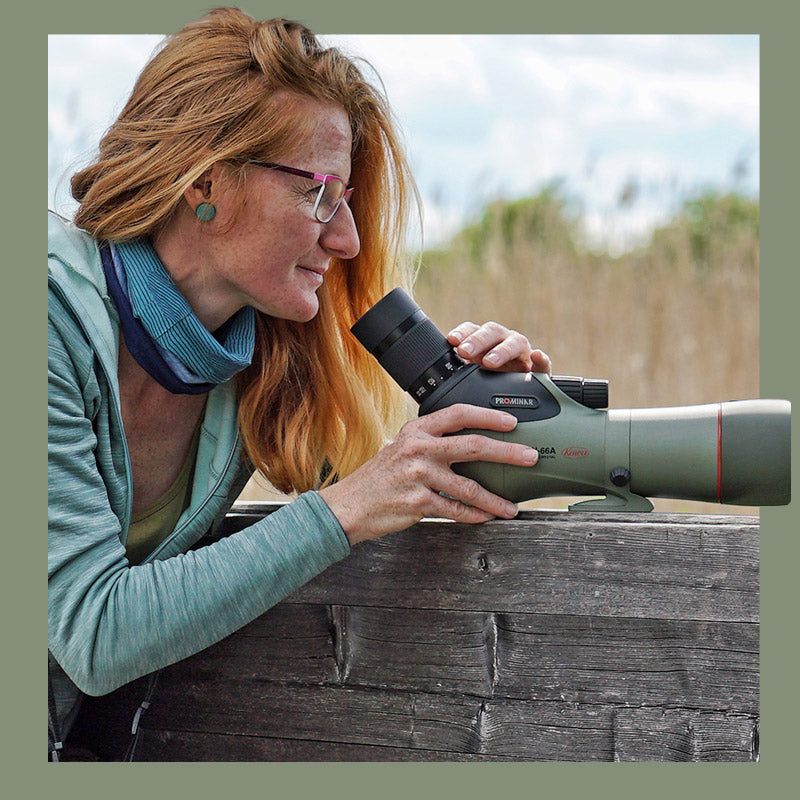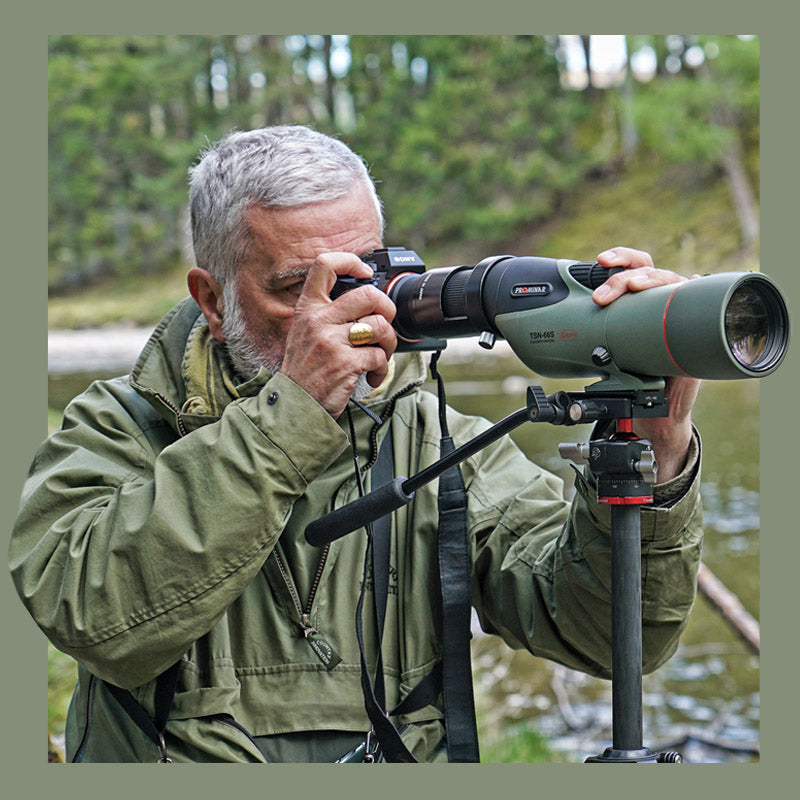

Whether you’re scanning shorebirds across a windswept bay or picking out the fine markings on a hawk hundreds of yards away, the right spotting scope transforms distant scenes into vivid, up-close experiences. Here’s what really matters when choosing a scope for birding or wildlife viewing and how to know when you’ve found a good one.
1. Optical Quality: The Heart of Any Great Scope

Everything starts with the glass. The quality of your view depends on how well the optics manage color, clarity, and contrast. Look for:
-
ED (extra-low dispersion) Glass to minimize color fringing and keep fine details razor sharp, even at higher magnifications.
-
Fluorite Crystal Lenses, the gold standard for eliminating chromatic aberration and boosting color fidelity and contrast.
-
Field Flattener Lenses, which keep the entire image, not just the center, tack-sharp from edge to edge.
2. Objective Lens Size: Light Makes the Difference

Your scope’s front (objective) lens determines how much light it gathers, which directly affects brightness and resolution:
-
55–66 mm: Lightweight and portable, great for hikes and travel. Perfect for daylight viewing.
-
77–88 mm: A balanced choice offering more brightness and better low-light performance. Ideal for dawn, dusk, or overcast days.
-
95 mm and above: Maximum detail and light capture, excellent for stationary use or photography, though bulkier to carry.
3. Lens Coatings: The Secret to Bright, High-Contrast Views

Modern lens coatings are crucial for clarity. Look for scopes labeled fully multi-coated, which means every air-to-glass surface is treated. Premium models also include protective outer coatings that repel water, resist fingerprints, and reduce glare for consistent performance in tough weather.
4. Precision Focusing: Because Nature Doesn’t Wait

A responsive focusing system makes or breaks your experience. The best scopes feature dual-speed focus knobs one for rapid adjustment and another for fine-tuning delicate details like feather texture or text at long distances. This setup makes focusing quick, accurate, and reliable, even with gloves on.
5. Eyepiece Design: Comfort and Clarity Combined

Eyepieces control your field of view, eye relief, and overall comfort. Look for:
-
Wide-angle zooms for expansive, immersive views that make it easy to locate and follow moving wildlife.
-
Long eye relief if you wear glasses, so you can see the full field without vignetting.
-
ED elements or field flatteners in the eyepiece for edge-to-edge sharpness and minimal distortion.
6. Wide Field of View: The Natural Advantage

A wide apparent field gives you a more natural, open perspective — crucial when scanning flocks or following fast-moving birds. If two eyepieces offer the same magnification range, go for the one with the wider field of view. You’ll immediately notice how much easier it is to track your subject.
7. ED Glass and Fluorite Crystal: For Next-Level Detail

At high magnification or in bright sunlight, color fringing can be distracting. ED glass cuts it dramatically, while fluorite crystal virtually eliminates it. The result? Higher contrast, richer tones, and crisp, realistic color that brings every feather and texture to life.
8. Rugged Construction: Built to Handle the Outdoors

Your spotting scope should be as tough as the environments you explore. Choose models with:
-
Magnesium alloy or similar lightweight metal bodies for strength without extra weight.
-
Weather sealing (O-ring sealed and nitrogen-purged) to prevent fogging and keep moisture out, even in harsh conditions.
9. Portability and Balance — Because the Best Scope Is the One You Carry

A compact, well-balanced scope paired with a stable but lightweight tripod makes long sessions in the field effortless. If you hike or travel often, prioritize portability. But if you’re into digiscoping or low-light observation, a larger objective lens is worth the extra size for the added brightness.
10. Why the Kowa PROMINAR Line Stands Out

If you’re looking for a scope that delivers on all of the above, Kowa PROMINAR models are in a class of their own:
-
Pure Fluorite Crystal Lenses: These world-renowned optics nearly eliminate chromatic aberration, producing pin-sharp, high-contrast images with natural color — ideal for identifying distant birds or fine plumage details.
-
Dual-Speed Focusing System: Kowa’s precision focus control lets you go from broad adjustments to micro-detail with ease, locking onto your subject even at 60× and beyond.
-
Lightweight Magnesium Body: The durable, compact chassis keeps weight down without sacrificing strength, perfect for all-day field use.
-
ED Wide-Angle Zoom Eyepiece (TE-11WZ II): Offers stunning edge-to-edge sharpness, excellent eye relief, and a wide, immersive field that makes long viewing sessions effortless.
-
Versatile System Compatibility: PROMINAR scopes pair beautifully with digiscoping adapters, extenders, and even astronomy eyepieces — letting you seamlessly shift from wildlife to moonlit skies.
In short, if you’re after exceptional optical performance, rock-solid precision, and a design built for real-world adventure, Kowa PROMINAR spotting scopes deliver an unmatched nature-viewing experience.